
Routine peptide testing
CPT handles routine peptide testing workflows in China. Routine testing is handled through CPT’s established testing workflow, with the test scope and sample requirements agreed before testing begins.
CPT — China Peptide Testing. Independent Third-Party Peptide Testing in China.
Ask About Testing (opens WhatsApp in a new tab)
CPT provides independent third-party peptide testing in China, with a structured workflow for sample handling, test selection, reporting and buyer communication.
Independent testing while your sample is still in China can support decisions before shipment, before final payment where your purchasing terms allow it, or when evaluating a new supplier before repeat orders.
CPT handles routine peptide testing workflows in China. Routine testing is handled through CPT’s established testing workflow, with the test scope and sample requirements agreed before testing begins.
For advanced or specialized analyses requiring additional instrumentation or expertise, CPT works with qualified analytical laboratories selected according to the required method, instrumentation and sample type.
This allows CPT to keep routine testing efficient while supporting more advanced analytical requirements when needed.
The laboratory and analytical method used for a specific test can be confirmed before testing begins.
Laboratory arrangements depend on the agreed analysis. CPT does not claim ownership of every laboratory or instrument used.
Explore Testing & Pricing →A structured workflow connects sample receipt, registration, analytical testing and reporting. Laboratory arrangements depend on the agreed analysis; testing imagery does not imply CPT ownership of every laboratory or instrument used.
CPT office and reception background wall.
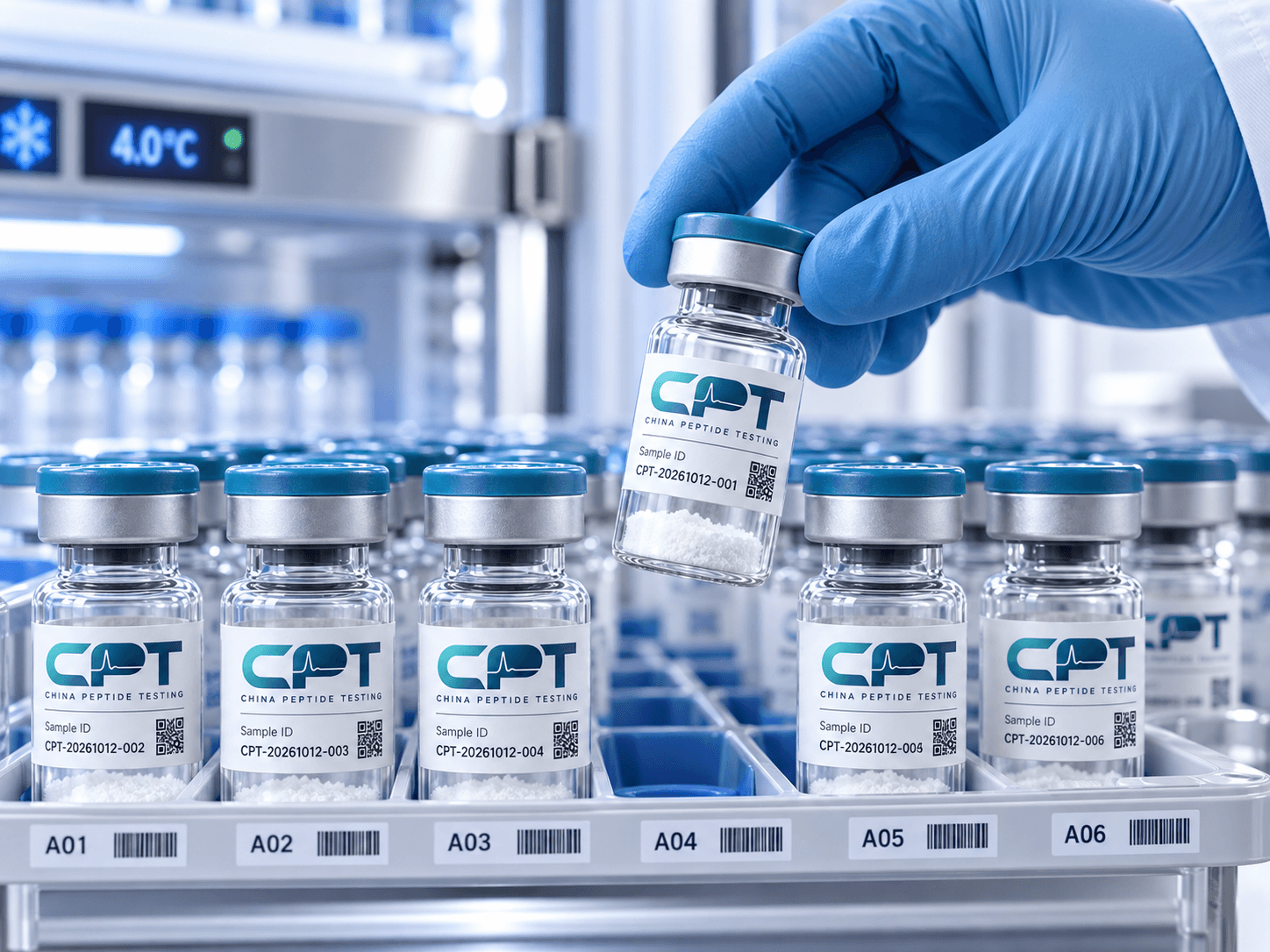
Document the sample received and check its packaging and accompanying information.
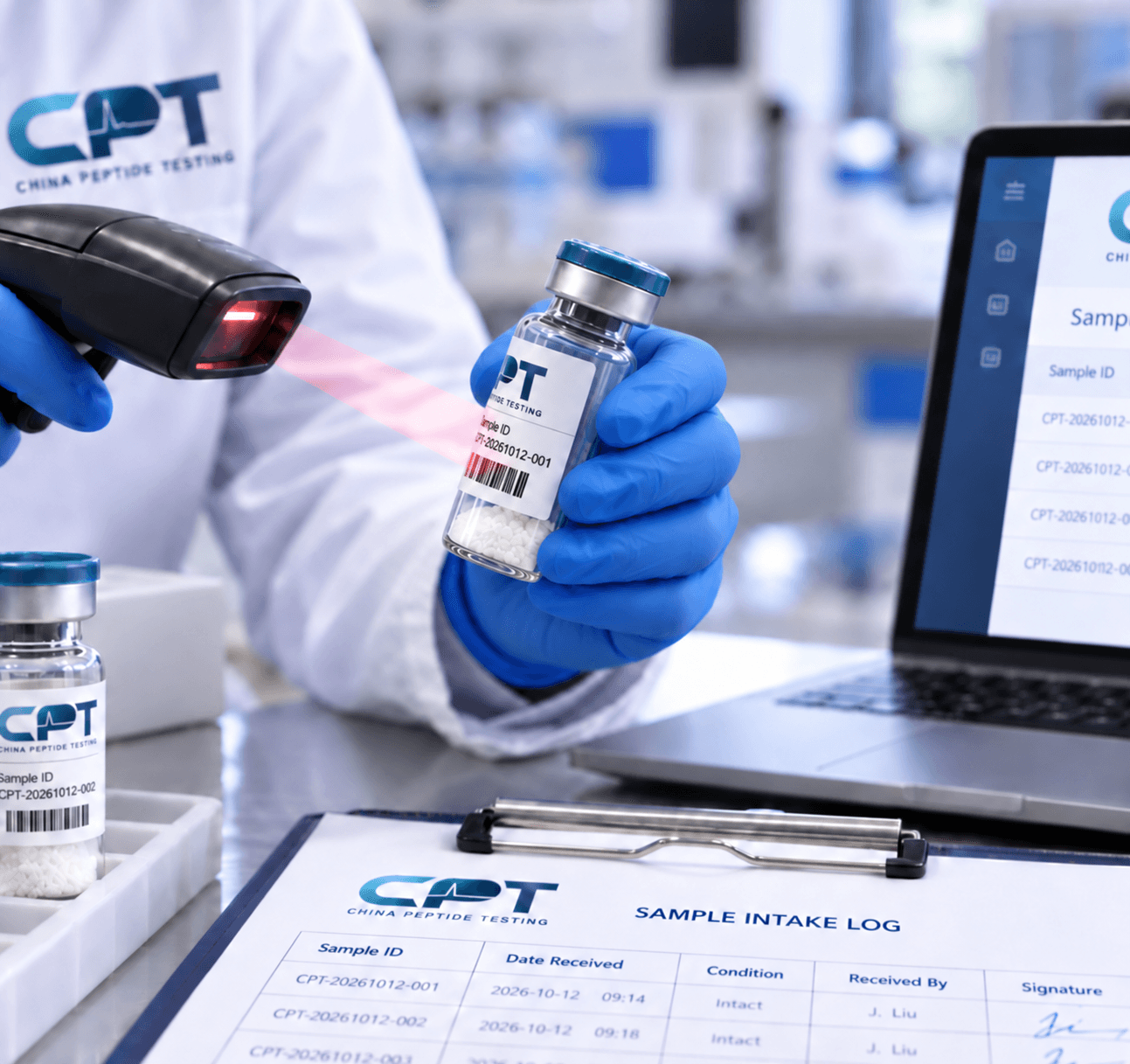
Connect the received vial, label and handling records to its CPT sample ID.
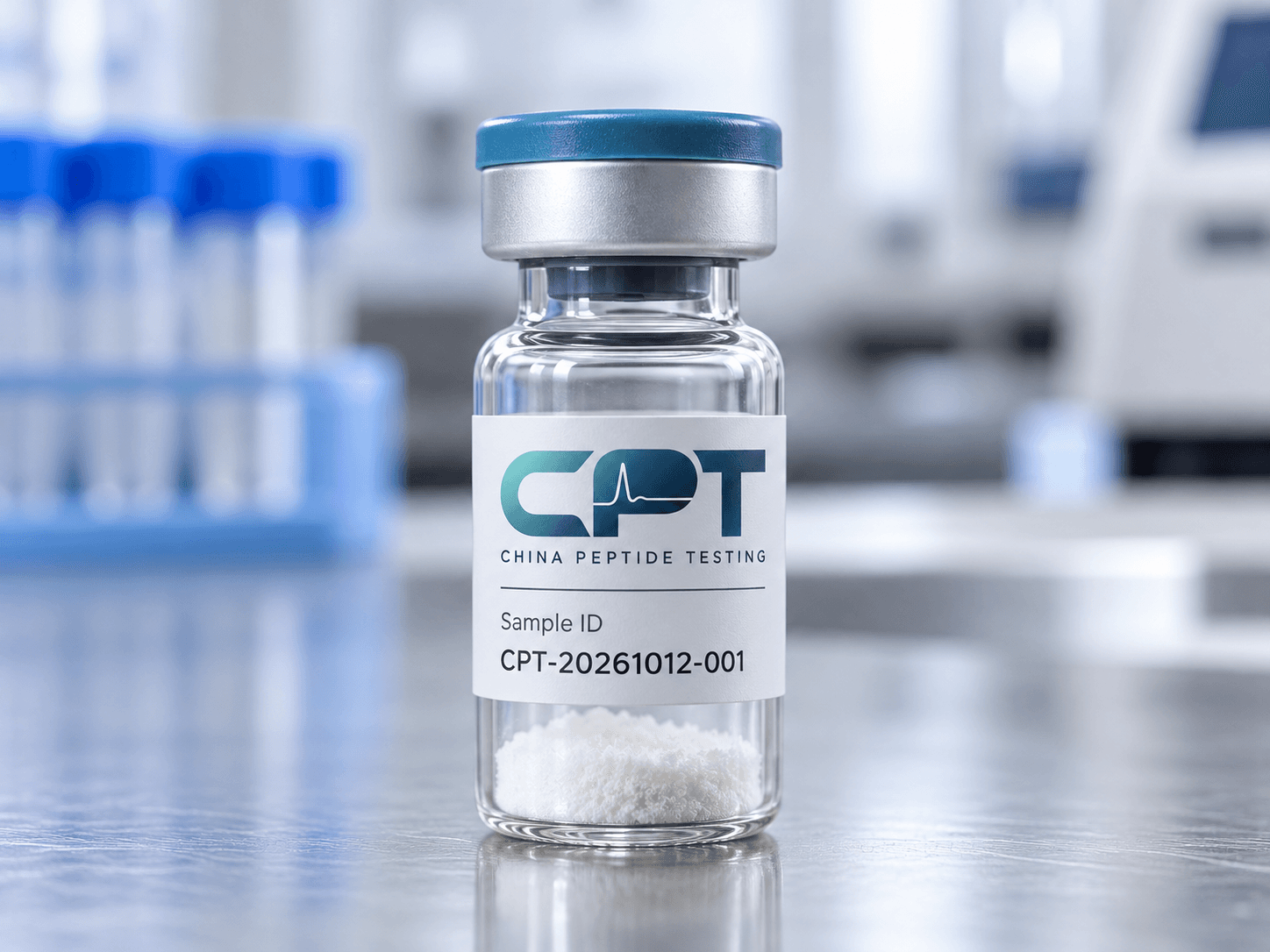
A small peptide vial containing lyophilized material, with identifying details recorded as part of sample handling.
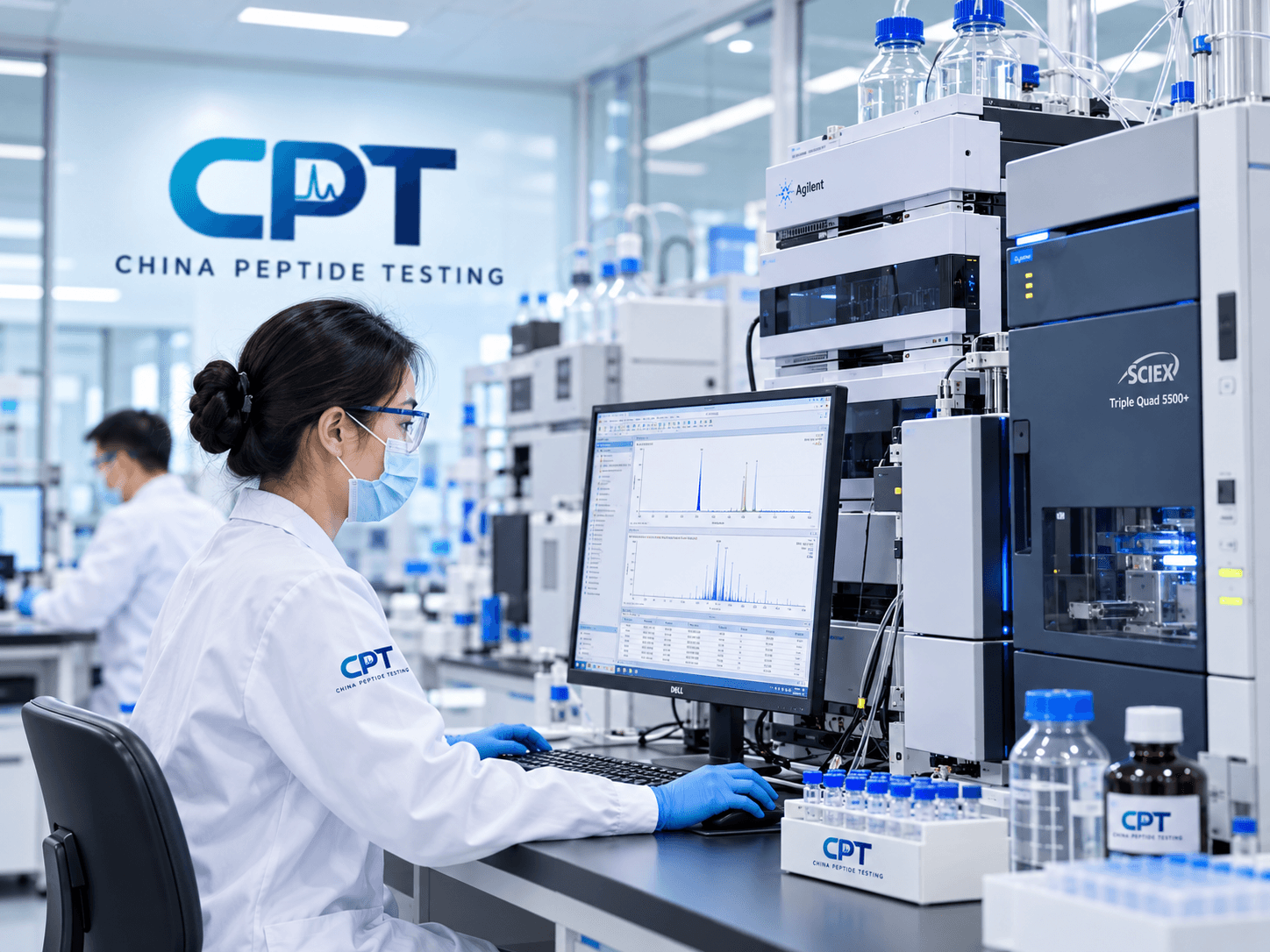
Analytical testing under the agreed scope, with the laboratory arrangement confirmed for the requested analysis.
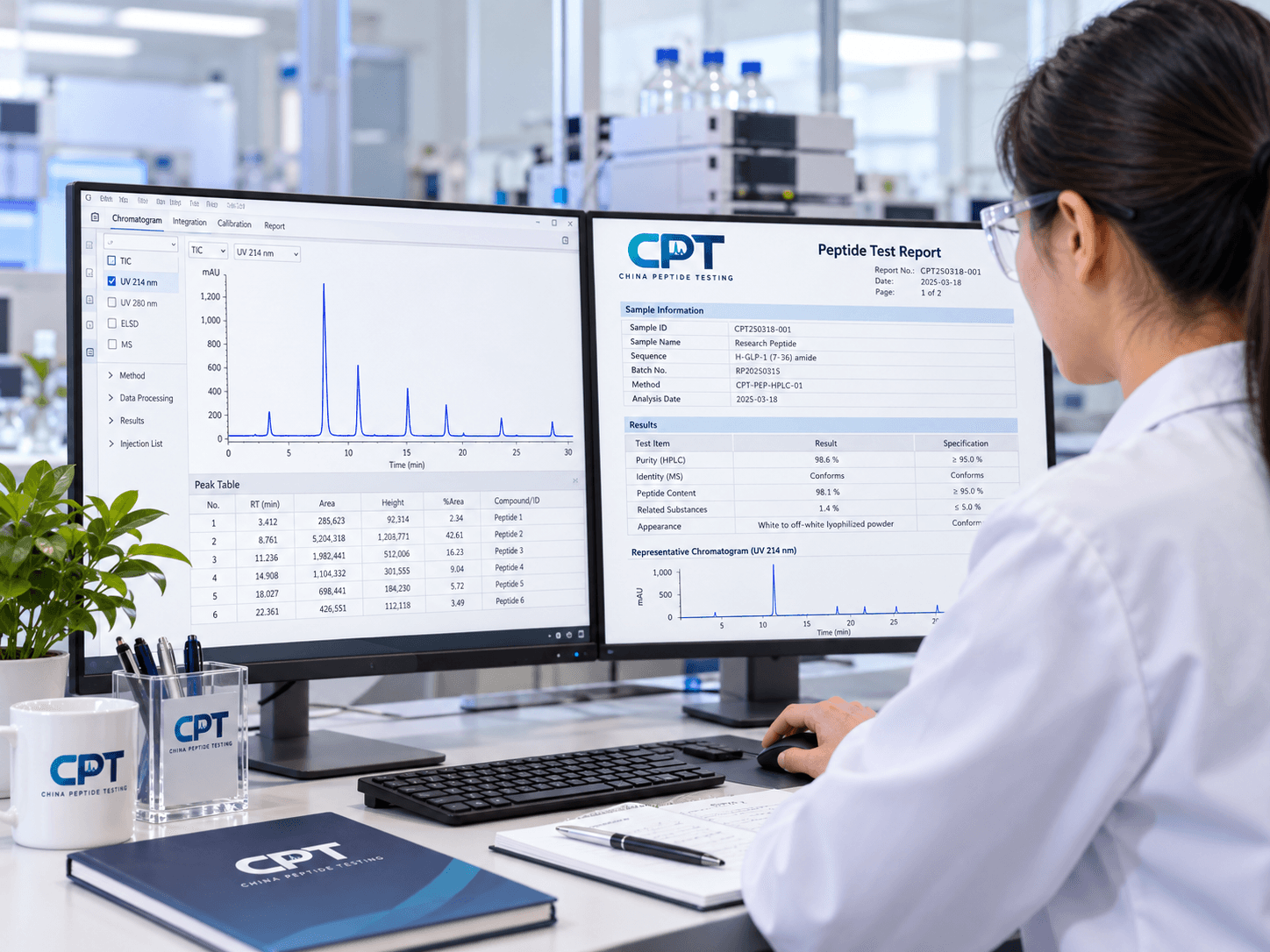
Review the analytical findings against the agreed test scope and method.

Prepare sample-specific reporting and deliver it through the agreed customer contact channels.
Testing provides analytical evidence separate from the supplier’s sale. Findings describe the sample received and the methods used; one tested sample cannot guarantee an entire batch or shipment.
Sample selection, documented handling and clear reporting help buyers understand what the result represents and make their own purchasing decisions.
Confirm the testing scope and sample requirements before ordering.